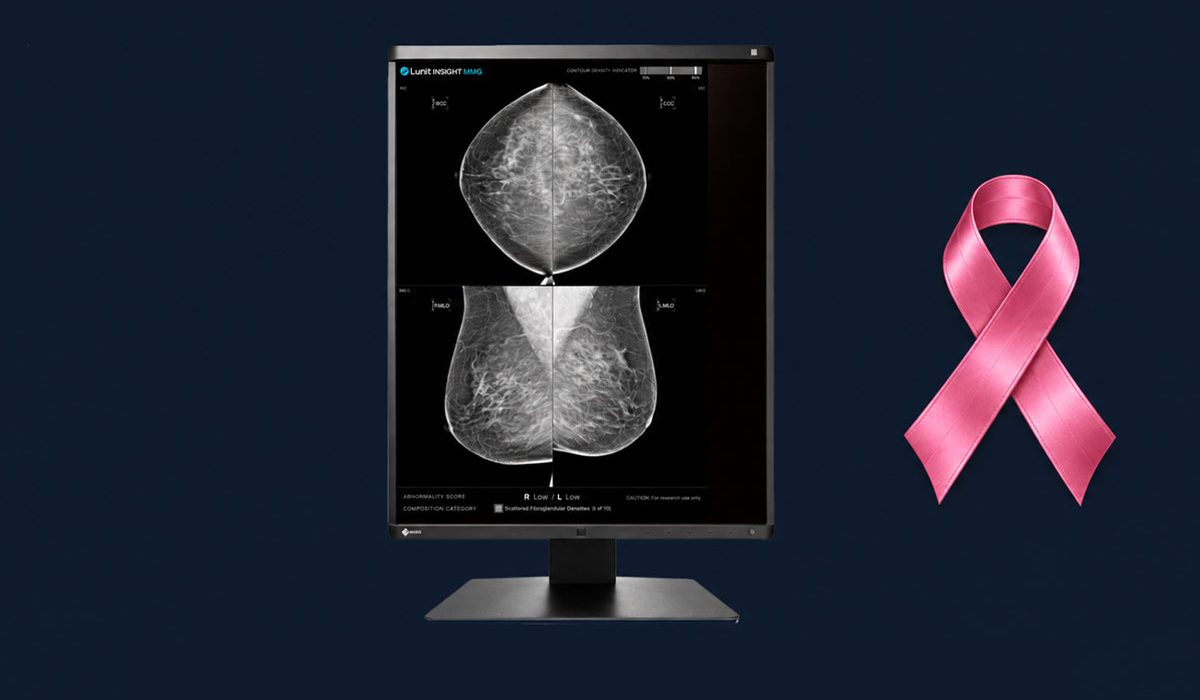
Pink October raises awareness. Lasting results depend on every link in the screening chain, from the mammography display to AI-assisted reading.
Every October, the UAE turns its attention to breast health. Campaigns launch, mobile screening units go out, and hospitals invite women in. The Ministry of Health and Prevention runs a national awareness campaign each Pink October, encouraging women, especially those aged 40 and above, to have periodic exams. The need is clear: breast cancer is the most common cancer among women in the UAE.
Awareness gets women through the door. What happens in the reading room decides what the screening is worth. The harder task for a radiology department is keeping that standard steady in the other eleven months of the year.
Screening is a chain.
A mammogram passes through several links before it becomes a report: acquisition, the display, the radiologist’s interpretation, and the quality control that keeps the display consistent. A weak link at any point limits the rest. Two of those links are where ARJ Group works with radiology teams: the display and the AI-assisted reading layer.
The display: seeing the finest detail
Mammography asks a lot of a screen. The EIZO RadiForce RX570 is built for breast imaging. It is a 21.3-inch color monitor that shows 5 megapixels (2048 x 2560) at a 0.165 mm pixel pitch. That is more detail than 2- or 3-megapixel displays can present. Although it is a colour monitor, EIZO states it reaches a brightness of 1200 cd/m². Its Hybrid Gamma PXL function distinguishes monochrome and colour pixels automatically, so greyscale mammograms and color content such as reports or other studies can share one screen. RadiForce RX570 | EIZO
For breast imaging, the compliance details matter as much as the specifications. The RX570 holds FDA 510(k) clearance for breast tomosynthesis and mammography, and EIZO supports quality control against mammography QC standards through RadiCS software. It supports DisplayPort daisy-chaining, and a MammoDuo version places two monitors on one stand. EIZO and its authorized distributors offer a five-year warranty.
The AI layer: a second set of eyes
Lunit INSIGHT MMG is AI software for 2D mammograms. It gives radiologists a malignancy likelihood score and marks areas that deserve a closer look. It is designed to work inside PACS and viewer workflows, and it supports both single and double reading. In a published study, Lunit reports higher accuracy in extremely dense breasts than radiologists reading alone, and it presents the software as a way to ease reading pressure where breast imaging specialists are scarce.
Two points keep this in perspective. The score estimates the likelihood that a lesion is malignant. It does not measure severity or predict outcome. And the radiologist remains the decision-maker: the software supports the read; it does not replace it.
Why the two belong together
AI marks and scores appear on the same screen where the radiologist reads the image. A display that renders fine structure and consistent greyscale lets the radiologist judge those marks against the image itself. Reliable calibration over the years keeps what the radiologist sees the same from one year to the next. A department that invests in AI but neglects its displays, or the reverse, leaves a link in the chain unprotected.
Beyond October
Screening programs succeed through consistency: the same quality in every reading room, every month, with documented quality control. EIZO’s RadiCS software manages calibration and quality-control testing. RadiNET Pro, described by EIZO for remote quality management, extends this across many monitors.
Talk to ARJ
ARJ Group is the authorized EIZO distributor in the UAE and neighboring countries. If your department is planning or upgrading a breast imaging workstation or considering AI-assisted mammography reading, our team can help you specify the display, the workstation, and the software together.