01
Fracture
Suspected fractures are flagged for review, including subtle ones that are easy to miss.

AI fracture detection
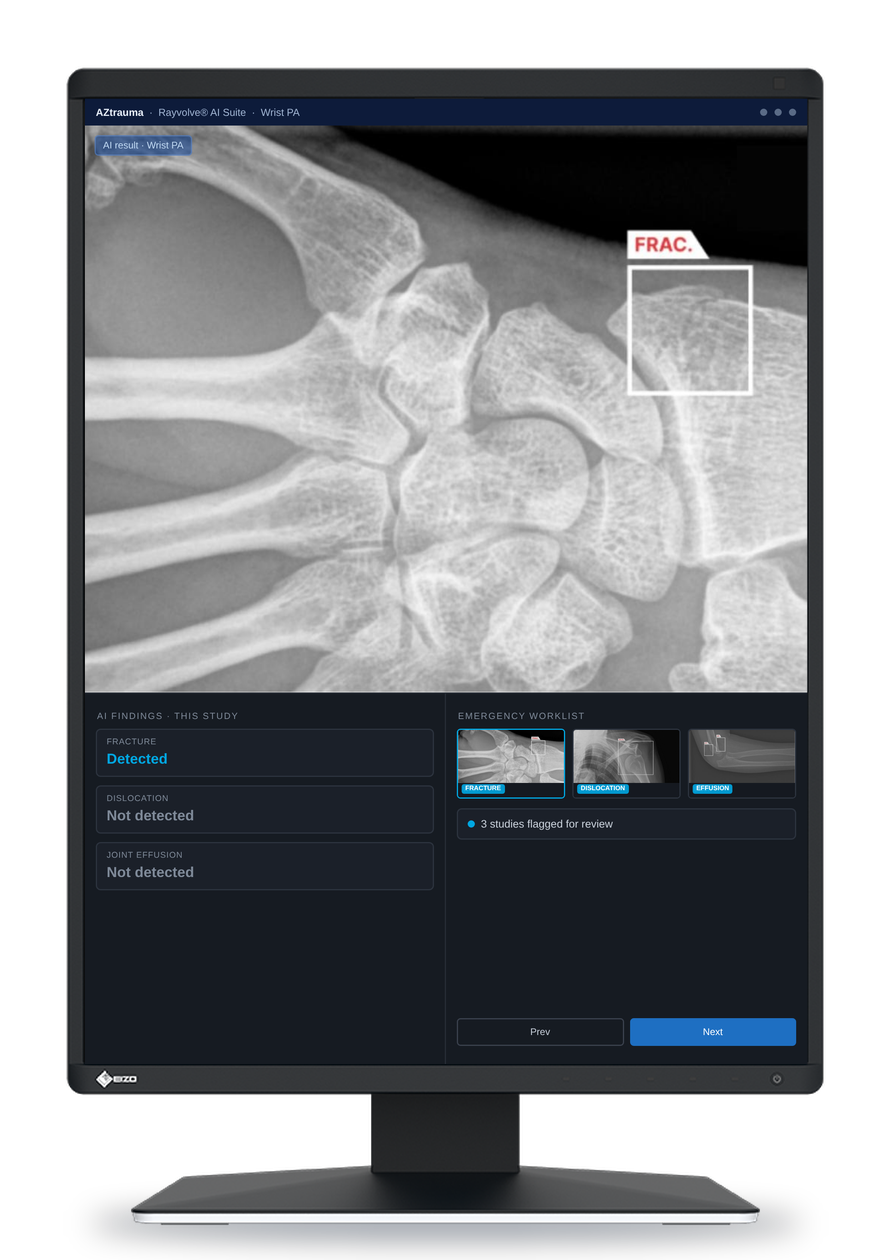
Fractures, dislocations and effusions — flagged on the X-ray.
AZtrauma analyses musculoskeletal X-rays and highlights suspected fractures, dislocations and joint effusions, helping emergency and radiology teams read faster and miss less.
Clinical value
In busy emergency departments, subtle fractures are easy to overlook. AZtrauma gives every X-ray a consistent second look, so teams can prioritise and confirm findings with more confidence.
Up to 67% fewer false negatives per case, in studies of more than 150,000 patients in 200 centres.
Up to 83% shorter turnaround time, with results returned to the PACS viewer.
Reader AUC improved from 0.84 to 0.89 with AZtrauma, while the clinician always makes the call.
What AZtrauma detects
Each finding is boxed and labelled directly on the radiograph and shown in your existing PACS viewer.
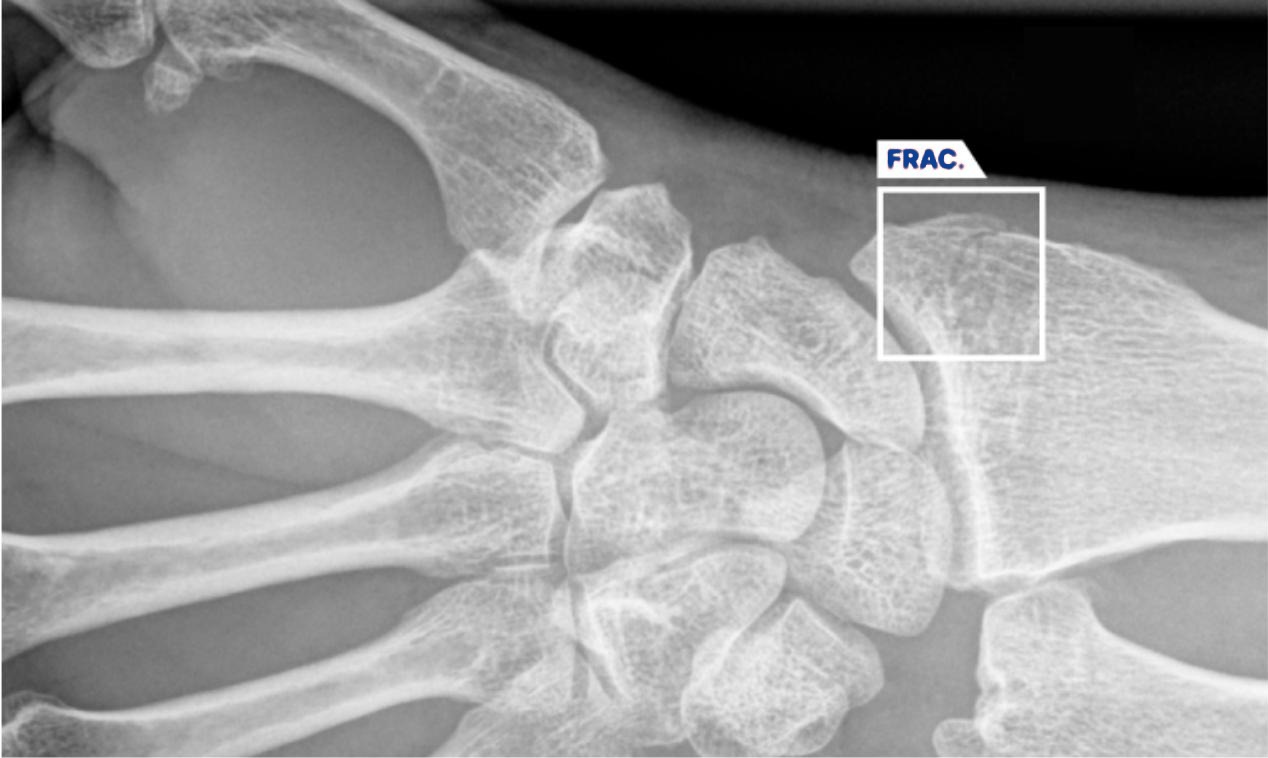
01
Suspected fractures are flagged for review, including subtle ones that are easy to miss.
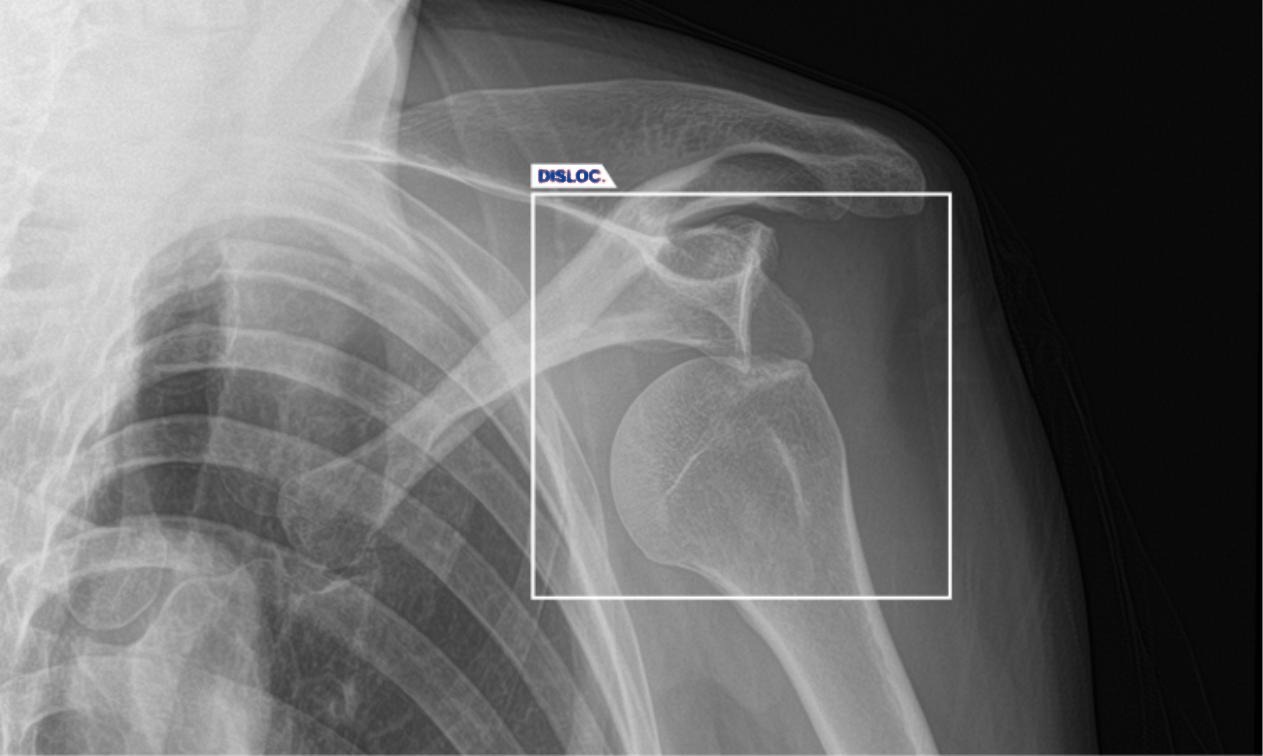
02
Joint dislocations, such as of the shoulder, stand out for immediate attention.
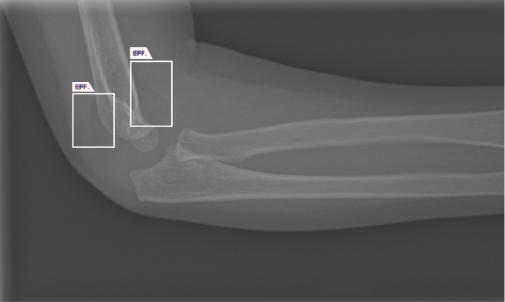
03
Joint effusions, for example at the elbow, are marked so the reader can look closely.
Performance
Sensitivity
Specificity
Negative predictive value
AUC
Cohen et al. (2026), Radiography: dual-reader consensus across 195,706 musculoskeletal examinations. Adults and children from 2 years (FDA).
Built for emergency care
Missed fractures are a known risk in fast-paced emergency settings. AZtrauma runs in the background and returns results to the PACS, with no change to how your team works.
AZtrauma assists clinicians. It does not replace the medical decision.
A second look at trauma X-rays, day and night.
Flagged findings to confirm, for faster reporting.
Extra support in image interpretation, especially out of hours.
Clinical evidence
A peer-reviewed multicentre study evaluated AZmed's Rayvolve® AI suite in real-world settings on five continents, with dual-reader consensus as the reference.
Cohen et al. (2026), Radiography.
Musculoskeletal examinations in the study
Continents, real-world clinical settings
Peer-reviewed publications
Studies and validations
AZtrauma by AZmed
Discuss PACS integration or request a product demo with an ARJ specialist.
Speak with an ARJ specialistHow it works
Standard radiographs, taken as usual.
Images go from your PACS to the AI over DICOM.
Fractures, dislocations and effusions flagged.
Findings shown with the images in the PACS.