AI for orthopedics & Bone Fracture

Azmed-logo-recolored-pure-white

AZmeasure

download (2)

AI fracture detection

AZtrauma

Fractures, dislocations and effusions — flagged on the X-ray.

AZtrauma analyses musculoskeletal X-rays and highlights suspected fractures, dislocations and joint effusions, helping emergency and radiology teams read faster and miss less.

AZtrauma fracture result on an EIZO RX370 monitor
Fracture detected Flagged on the X-ray
97.4% sensitivity Cohen et al. 2026

Clinical value

Consistent numbers.
Less manual drawing.

Manual angle and length measurements take time and vary between readers. AZmeasure places the landmarks, lines and values automatically, so every study is measured the same way.

Operator-independent values

Reproducible measurements that are consistent between readers.

Diagnosis, planning and follow-up

Objective values for orthopaedic diagnosis, surgical planning and longitudinal follow-up.

Ready for the report

Annotated images and a structured measurement report returned to the PACS.

What AZmeasure measures

From the spine to the foot.

Landmarks, lines and values are drawn directly on the radiograph, with a structured report for each study.

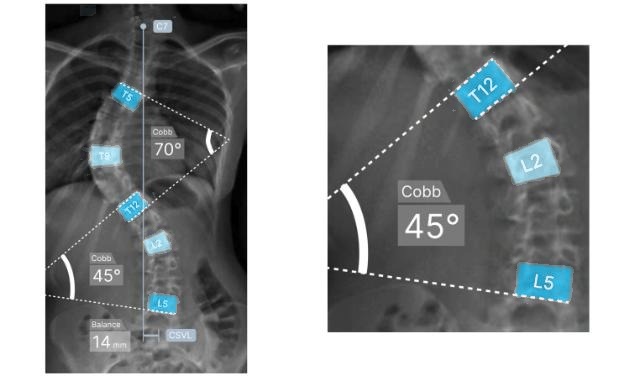
AZmeasure Cobb angle measurements on a spine X-ray Spine
Frontal & lateral

Scoliosis

Automated Cobb angles, with lordosis, kyphosis and pelvic balance.

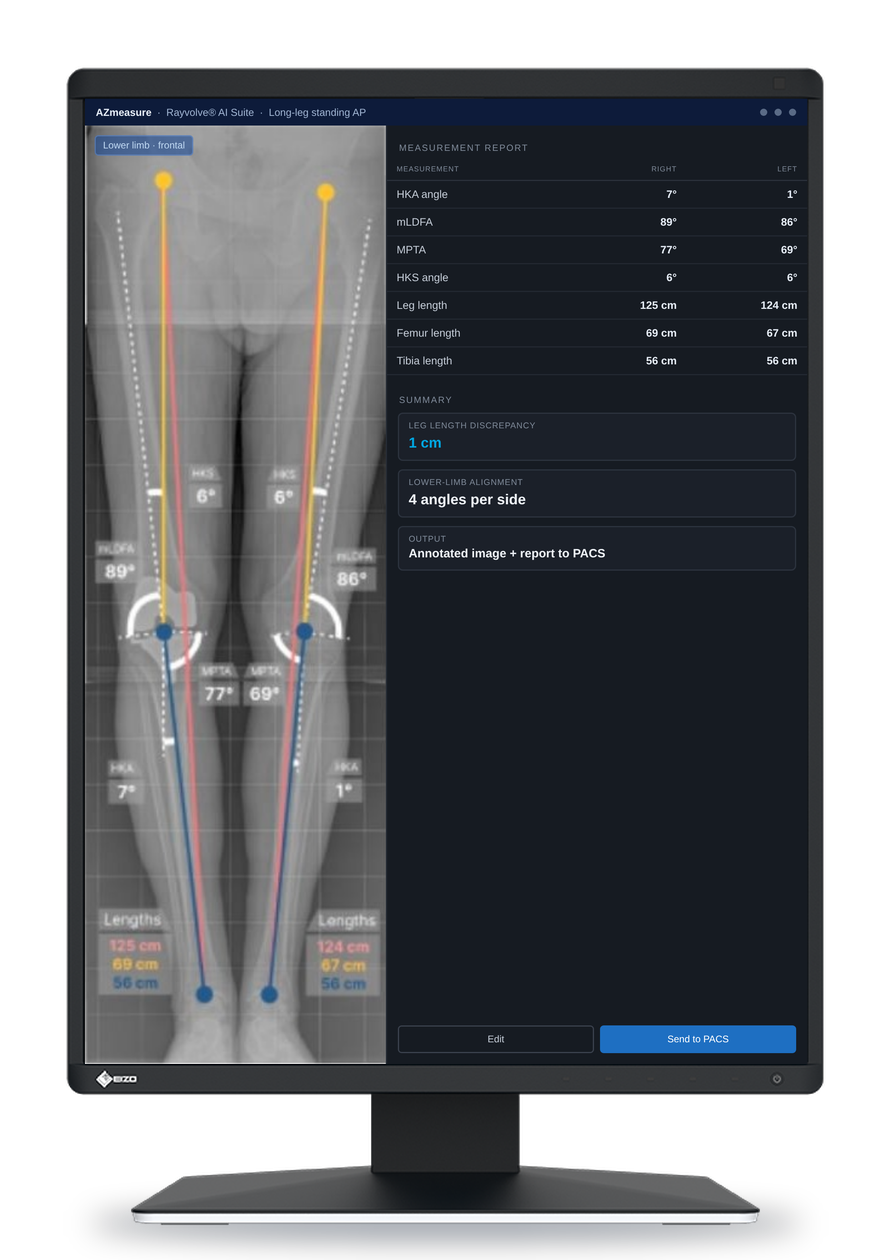
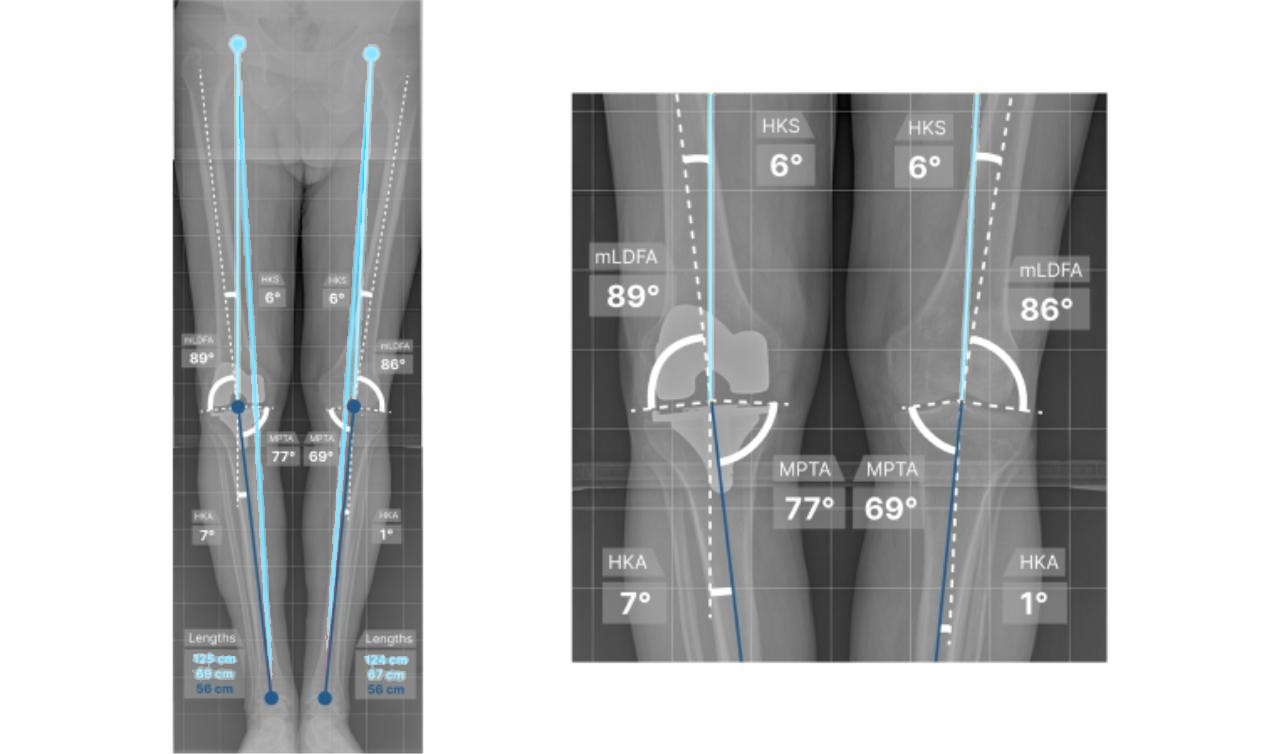
AZmeasure leg length and knee alignment measurements Lower limb
Frontal

Leg length discrepancy

Limb lengths and knee alignment, including genu valgum and varum.
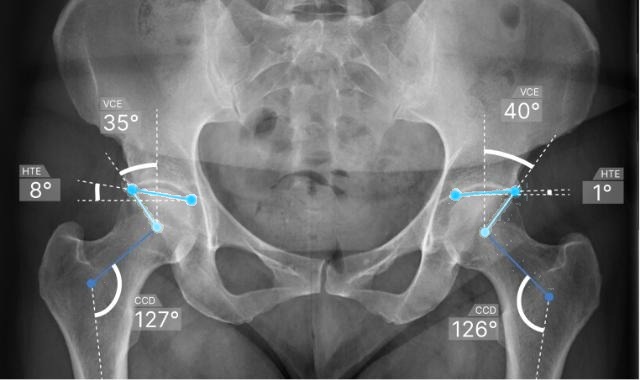
AZmeasure hip angle measurements on a pelvis X-ray Hip
Pelvis AP

Hip dysplasia & FAI

Hip angles for dysplasia and femoro-acetabular impingement.
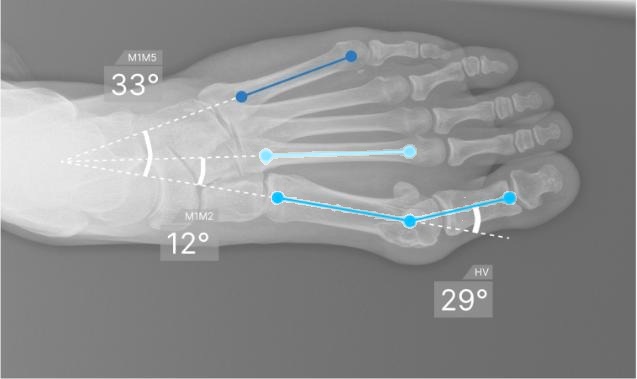
AZmeasure hallux valgus angle measurements on a foot X-ray Foot
Frontal

Hallux valgus

Forefoot angles such as the hallux valgus and intermetatarsal angles.
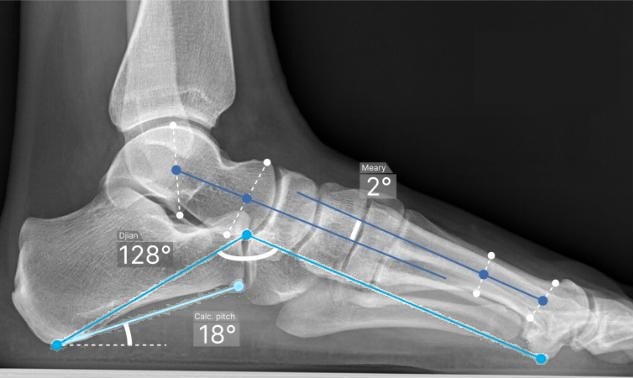
AZmeasure arch angle measurements on a lateral foot X-ray Foot
Lateral

Flat or hollow foot

Arch angles such as Meary's angle and calcaneal pitch.

Precision

AZmeasure at a glance

Average error for angles

Average error for lengths

Anatomical regions

All ages

Adults and children

Average mean absolute error (AZmed). Regions: upper limb, spine, pelvis, lower limb and foot.

Built for orthopaedic teams

The same measurement, every time.

AZmeasure works on standing and weight-bearing radiographs and returns results to the PACS, so values stay consistent from first visit to follow-up.

AZmeasure supports clinicians. The measurements can be reviewed before reporting.

Orthopaedic surgeons

Objective angles and lengths for surgical planning.

Radiologists

Measurements and a structured report, ready to review.

Follow-up clinics

Comparable values over time, for scoliosis or limb alignment.

Clinical evidence

Validated in the world's largest X-ray AI study.

AZmeasure was evaluated within a peer-reviewed multicentre study of AZmed's Rayvolve® AI suite, against dual-reader consensus.

Cohen et al. (2026), Radiography.

752

X-rays in the AZmeasure evaluation

28

Measurements assessed

1.83°

Mean absolute error for angles

1.1 mm

Mean absolute error for distances

AZmeasure by AZmed

Measure every study the same way.

Discuss PACS integration or request a product demo with an ARJ specialist.

How it works

Measurements delivered to your viewer.

  1. Radiograph acquired

    Standing or weight-bearing X-ray, taken as usual.

  2. Sent automatically

    Images go from your PACS to the AI over DICOM.

  3. AI measurement

    Landmarks placed, angles and lengths calculated.

  4. Report in the PACS

    Annotated image and structured report.

Product Enquiry